
Gas Leak Detector Guide: Choosing the Right Device and Understanding Calibration
Learn how to choose a gas leak detector for your application and understand the importance of gas compatibility, functional testing and calibration.
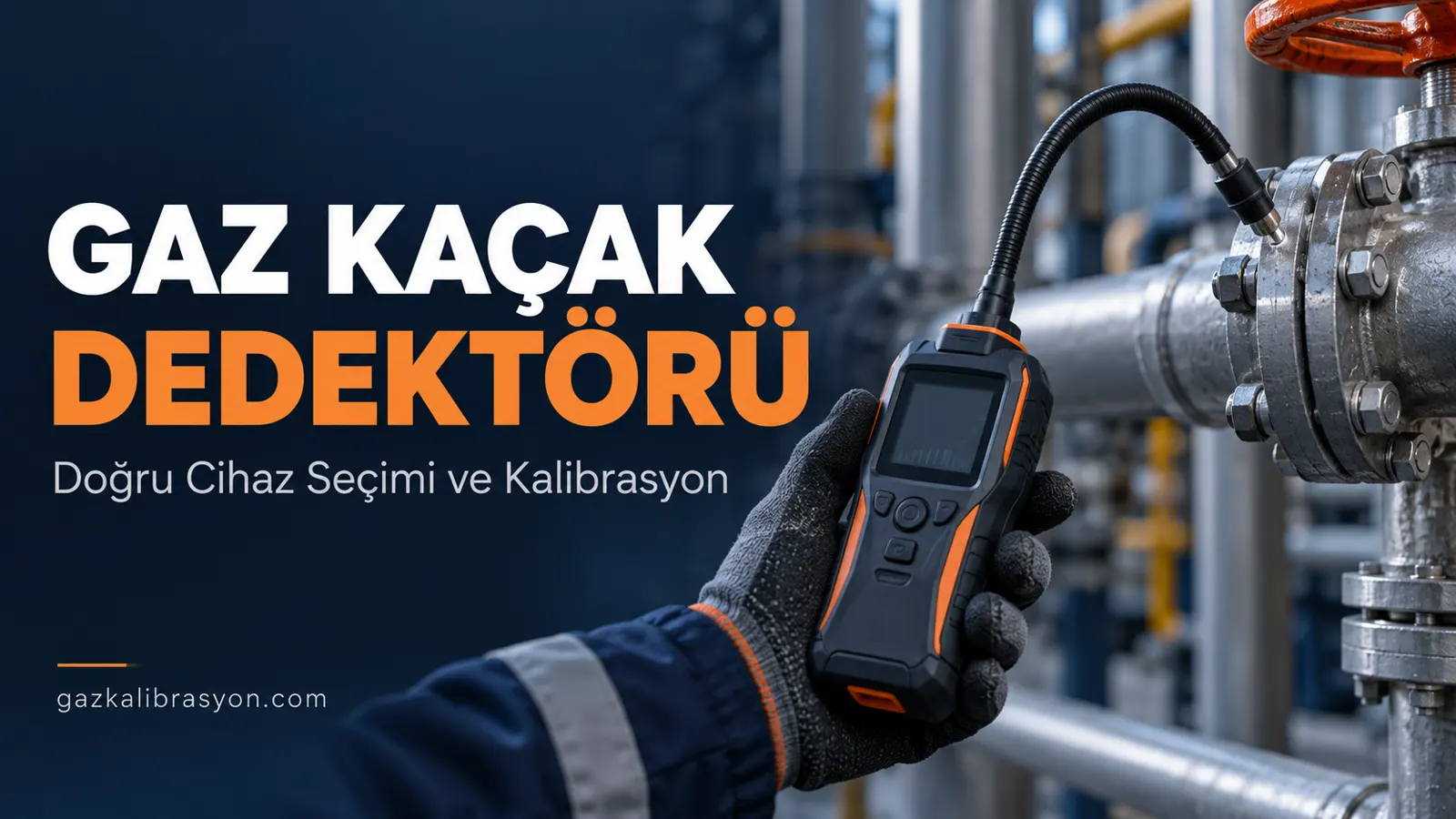
Detecting leaks in gas installations and industrial systems is an important part of maintaining safe working conditions. Gas leak detectors help users locate potential leaks around pipe connections, valves and other system components when the correct device and operating procedures are used.
However, a device’s ability to detect gas does not mean it can detect every gas or operate in every environment. Choosing a gas leak detector requires careful consideration of the intended application, target gas and manufacturer’s specifications.
What Is a Gas Leak Detector?
A gas leak detector is a device designed to detect the presence of specific gases and provide an indication to the user. Depending on the model, it may offer an audible warning, visual indicator, concentration display or a combination of these features.
Devices intended for natural gas and LPG leak detection use sensors compatible with particular gases. Their ability to detect methane, propane or butane varies by model. Always check the manufacturer’s supported gas list before selecting a device.
Where Are Gas Leak Detectors Used?
Suitable gas leak detectors can be used during gas installation maintenance, connection checks and leak investigations involving industrial equipment. Models with flexible probes can help users reach difficult-to-access connections.
The intended application matters. A device designed to locate a leak is not automatically suitable for monitoring personal gas exposure or assessing confined-space entry conditions. Those applications require detectors with appropriate measurement capabilities and safety features.
How to Choose a Gas Leak Detector
Price alone should not determine your choice. Consider the following factors alongside your application:
Target gas: The gases detected by the device must match those present in the system being checked.
Sensitivity and measurement range: Locating small leaks and monitoring ambient gas concentrations may require different capabilities.
Display and warning features: Some devices provide numerical readings, while others offer audible or graded indicators.
Probe design: Probe length and flexibility should suit the accessibility of the connection points.
Operating conditions: Temperature, humidity and environmental conditions must remain within the manufacturer’s specified limits.
Hazardous-area suitability: If the device will be used in a potentially explosive atmosphere, verify its relevant Ex/ATEX approval and operating limitations.
Maintenance and calibration support: Consider sensor replacement, servicing and testing requirements before purchasing.
Why Is Gas Leak Detector Calibration Important?
Reliable gas detection requires the checks and maintenance procedures specified by the manufacturer. For devices that provide quantitative measurements, calibration establishes the relationship between the device’s indications and known reference values. Any necessary adjustment is a separate procedure carried out according to the device’s instructions.
Not every gas leak detector follows the same calibration process. Some models are designed to locate leaks rather than provide precise gas concentration measurements. For these devices, the manufacturer’s specified functional tests, sensitivity checks or servicing procedures should be followed.
When requesting a service, provide the device’s brand, model, sensor information and supported gas types so that the appropriate service scope can be assessed.
Are Functional Testing and Calibration the Same?
A functional test checks whether the device responds to an appropriate test gas and whether its available alarms operate. Often called a “bump test,” this procedure does not, by itself, confirm the accuracy of numerical measurements.
Calibration or a calibration check evaluates measurement performance against reference values. These procedures serve different purposes and should not be treated as interchangeable.
There is no single testing interval that applies to every gas detector. Follow the manufacturer’s instructions, consider the operating conditions and apply the relevant workplace procedures.
Request a Gas Leak Detector Calibration Quote in Ankara
Contact ESA Gaz Kalibrasyon to discuss the service requirements for your gas leak detector’s brand and model. Including the number of devices, target gas and previous calibration information in your enquiry will help us assess your requirements.
Request a Gas Leak Detector Calibration Quote
Address: İvedik OSB Mah. Melih Gökçek Bulvarı Ada Plaza No: 80/24 Yenimahalle / Ankara, Türkiye
Phone: +90 312 385 52 81
Mobile: +90 533 659 91 60
Email: kalibrasyon@esaelektronik.com
Website: www.gazkalibrasyon.com
Customer reviews
Share your experience
No published reviews yet. Be the first to write one.
More articles
Keep reading
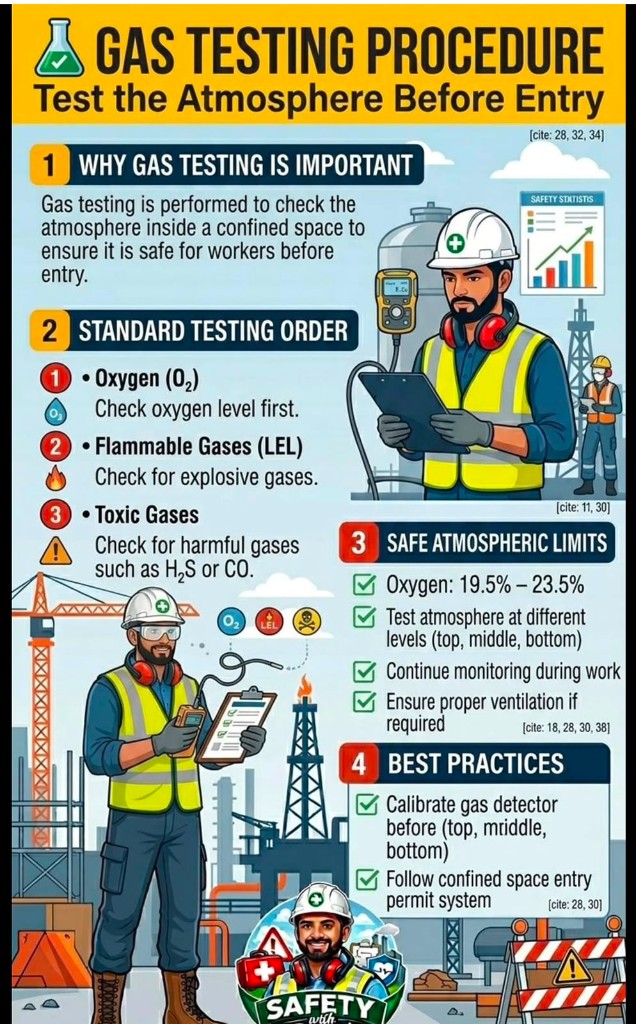
Gas testing before confined-space entry
Before entry, test oxygen, LEL then toxics. A calibrated gas detector is part of confined-space safety.
· 9 dk
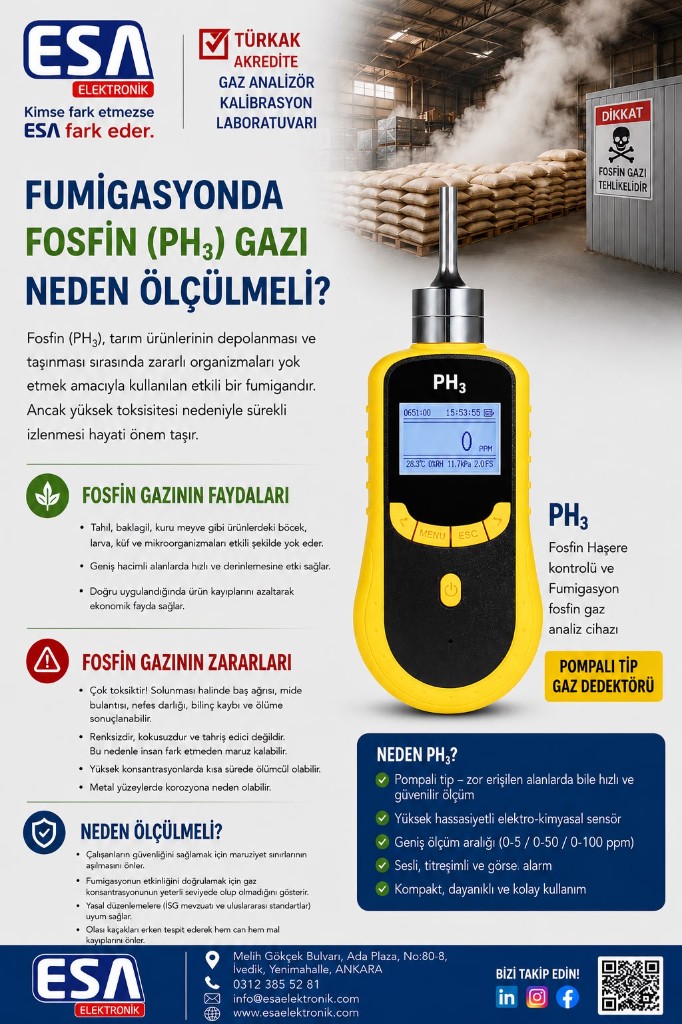
Why measure phosphine (PH₃) during fumigation?
Phosphine is effective in grain fumigation but highly toxic. Pump PH₃ detectors and calibration.
· 8 dk
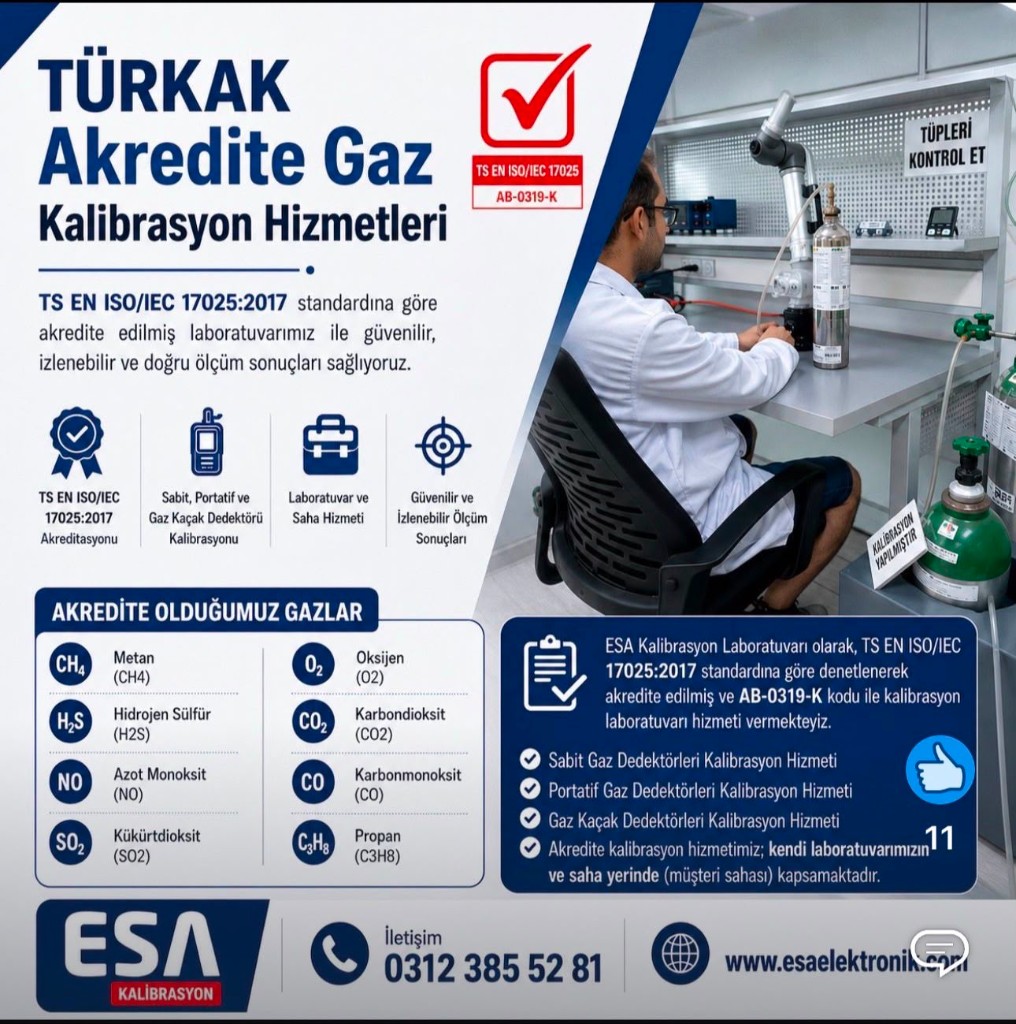
TURKAK accredited gas calibration services
Under AB-0319-K: methane, H₂S, O₂, CO, CO₂, SO₂, NO and propane — lab and field.
· 8 dk