
Why measure phosphine (PH₃) during fumigation?
Phosphine is effective in grain fumigation but highly toxic. Pump PH₃ detectors and calibration.
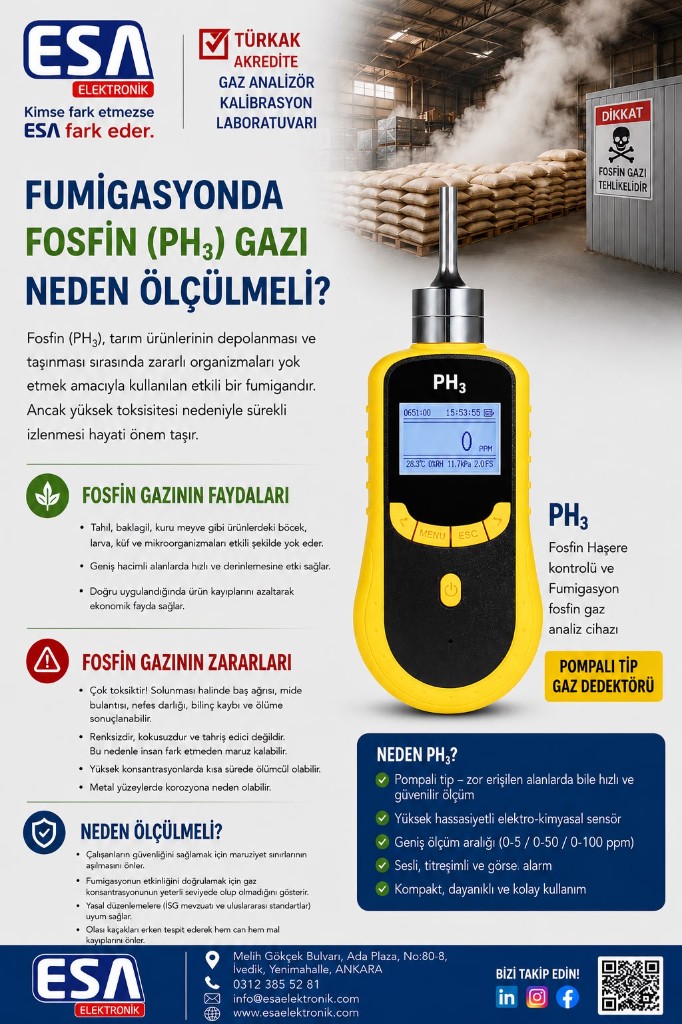
Phosphine (PH₃) is an effective fumigant against pests in grain, pulses and dried-produce stores. Used correctly it cuts product loss; used without monitoring, its high toxicity can cause respiratory and neurological injury or death. ESA Elektronik supplies and calibrates pump-type PH₃ analysers for fumigation sites.
Benefits
- Targets insects, larvae, mould and microbes in stored produce.
- Can treat large warehouse volumes when distributed correctly.
- Reduces repeat fumigation cost when the dose and dwell time are right.
Hazards
- Highly toxic by inhalation; headache, nausea, breathlessness, loss of consciousness and death are possible.
- May be colourless and odourless, so smell is not a reliable warning.
- High concentrations can be fatal in a short time; corrosion of metals is also a risk.
Why measure it
To keep workers below occupational limits, to prove the fumigation worked, to avoid under- or over-dosing, and to meet H&S and international rules. “We smelled it, so it is fine” does not work for PH₃.
Pump-type PH₃ detectors
An aspirated instrument draws a sample through a hose into silos, containers and holds. Electrochemical cells, ranges such as 0–5 / 0–50 / 0–100 ppm, audible-visual-vibe alarms and a field-ready body are typical. The unit still needs a bump test and periodic TURKAK-traceable calibration.
Our laboratory is at Ivedik OSB Ada Plaza (AB-0319-K). Brand-model, range (ppm) and quantity are enough for a quote.
Request a calibration quote · TURKAK gas calibration · 0312 385 52 81 · 0533 659 91 60
Customer reviews
Share your experience
No published reviews yet. Be the first to write one.
More articles
Keep reading
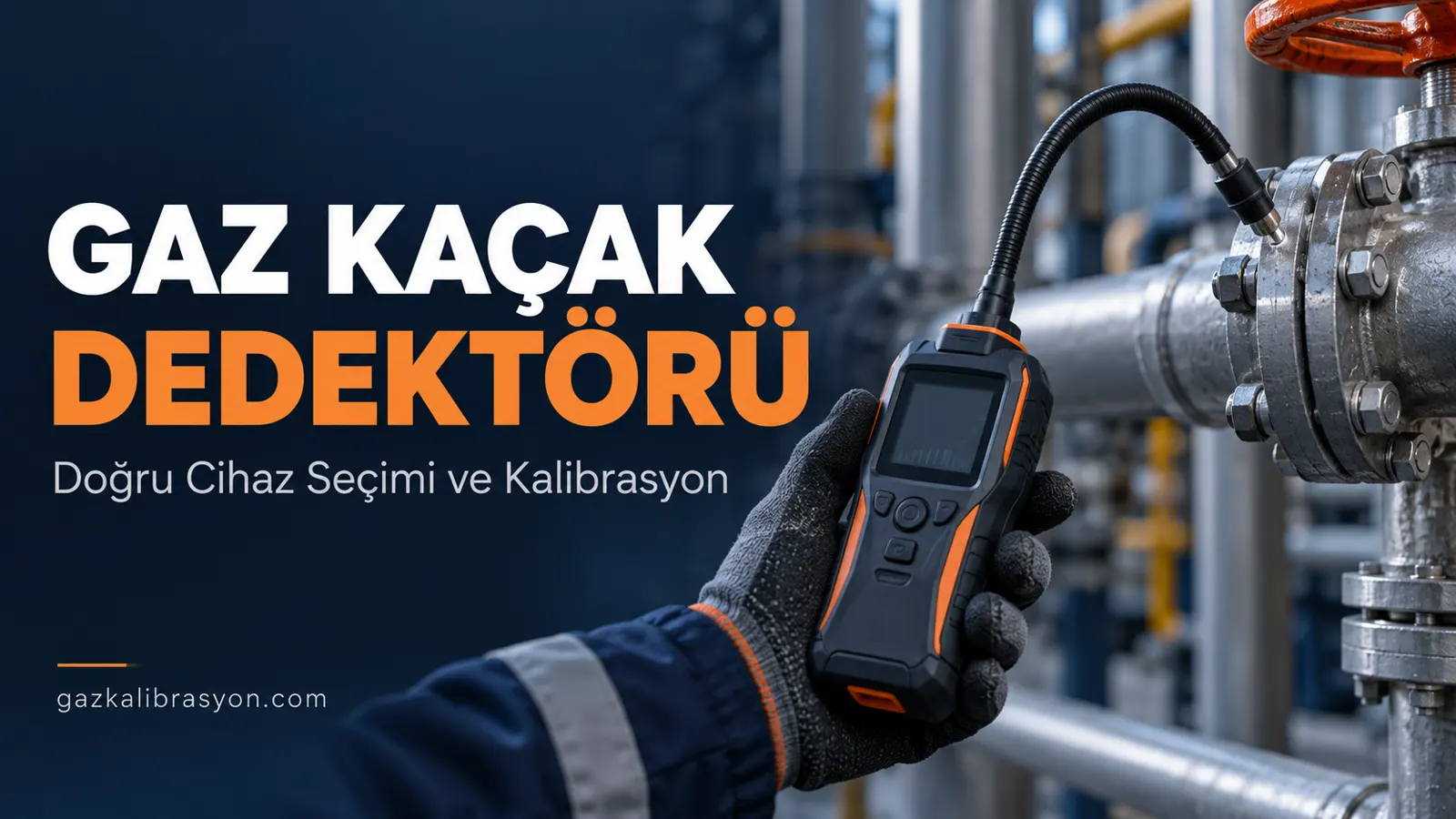
Gas Leak Detector Guide: Choosing the Right Device and Understanding Calibration
Learn how to choose a gas leak detector for your application and understand the importance of gas compatibility, functional testing and calibration.
· 5 dk
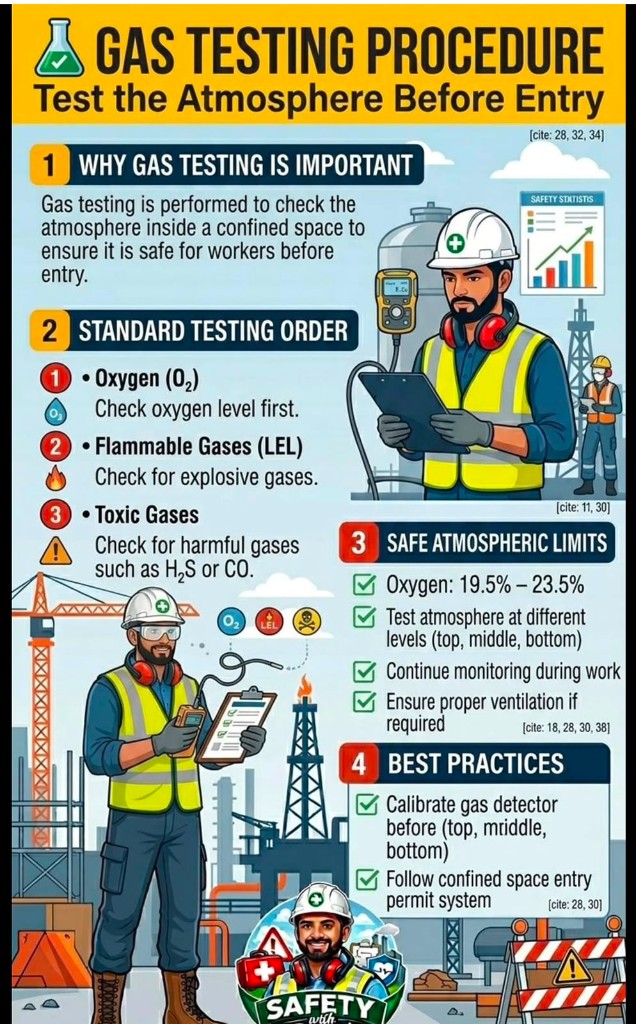
Gas testing before confined-space entry
Before entry, test oxygen, LEL then toxics. A calibrated gas detector is part of confined-space safety.
· 9 dk
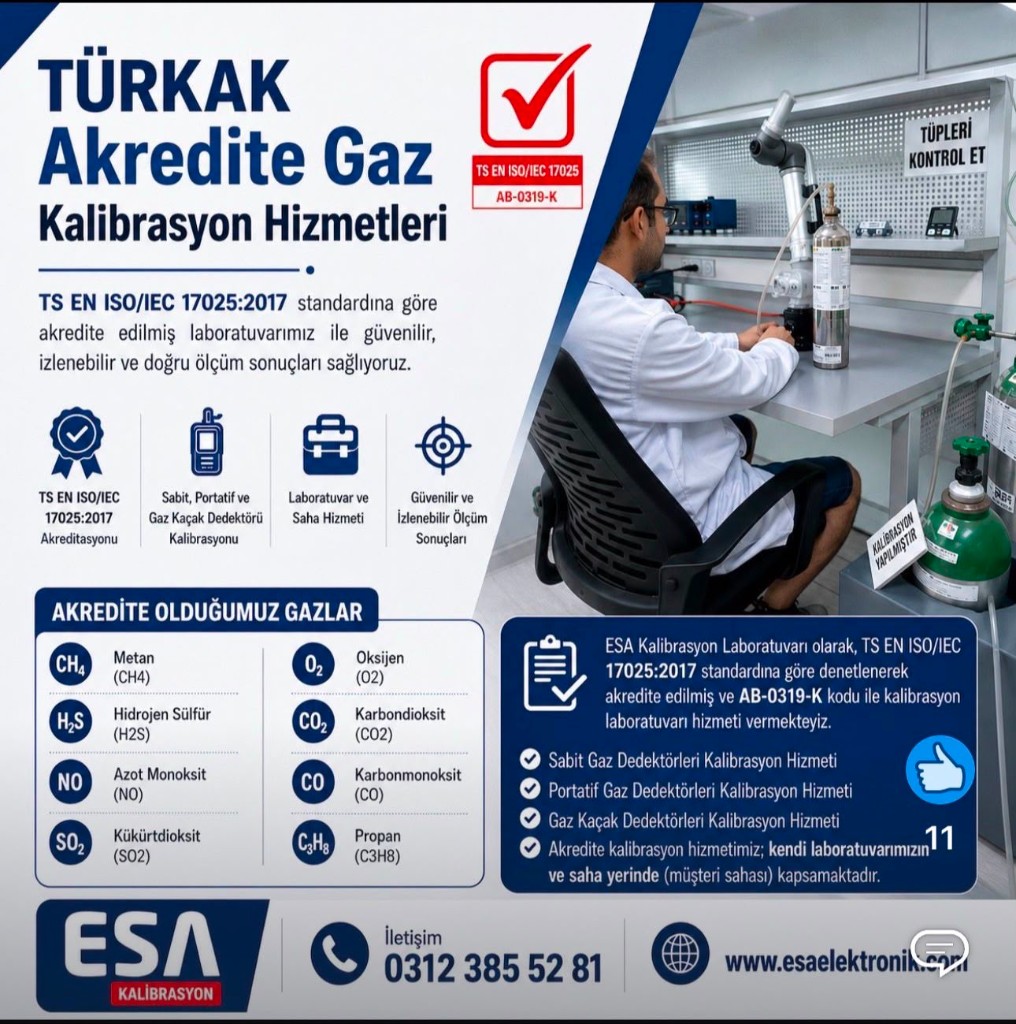
TURKAK accredited gas calibration services
Under AB-0319-K: methane, H₂S, O₂, CO, CO₂, SO₂, NO and propane — lab and field.
· 8 dk