
Gas testing before confined-space entry
Before entry, test oxygen, LEL then toxics. A calibrated gas detector is part of confined-space safety.
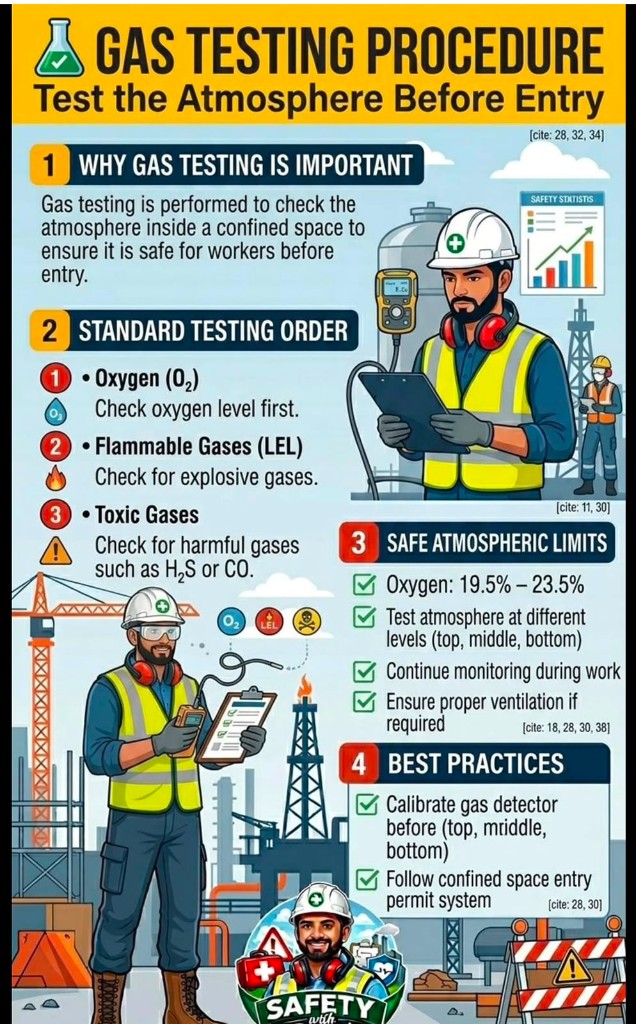
Testing the atmosphere before entering a confined space (tank, pit, silo, manhole, cargo hold, process vessel) is the first step against fatal incidents. Entry without measurement can kill through oxygen deficiency, an explosive mixture or a toxic gas. ESA Gaz Kalibrasyon summarises the field order of tests, typical limits and why a calibrated gas detector is required.
Why gas testing is required
Ventilation is weak in a confined volume. Nitrogen inerting, decay, welding fume or a leak can drop oxygen, push flammable vapour toward LEL, or accumulate H₂S or CO. A permit to work is incomplete without a written gas test. The detector itself is not “safe” on the day without a bump-test or calibration record.
Standard testing order
- Oxygen (O₂) first — some sensors mis-read without oxygen.
- Flammable gases (LEL) — %LEL for methane, propane, solvent vapour.
- Toxic gases — H₂S, CO and the process gas with the correct cell.
Safe atmospheric limits
- Oxygen: a typical acceptance band is 19.5–23.5% vol (site procedure and national rules apply).
- Test at top, middle and bottom; gases stratify by density.
- Keep monitoring during the job; a single snapshot is not enough.
- Ventilate if required, then re-test.
Best practice
Calibrate the detector before entry and zero it in clean air. A bump test proves the cell responds; periodic calibration documents deviation. Do not start without a permit, attendant and rescue plan.
ESA Calibration Laboratory calibrates fixed and portable detectors in the lab or on site under TS EN ISO/IEC 17025:2017 and TURKAK AB-0319-K. Current scope is on the certificates page.
Request a calibration quote · TURKAK gas calibration · 0312 385 52 81 · 0533 659 91 60
Customer reviews
Share your experience
No published reviews yet. Be the first to write one.
More articles
Keep reading
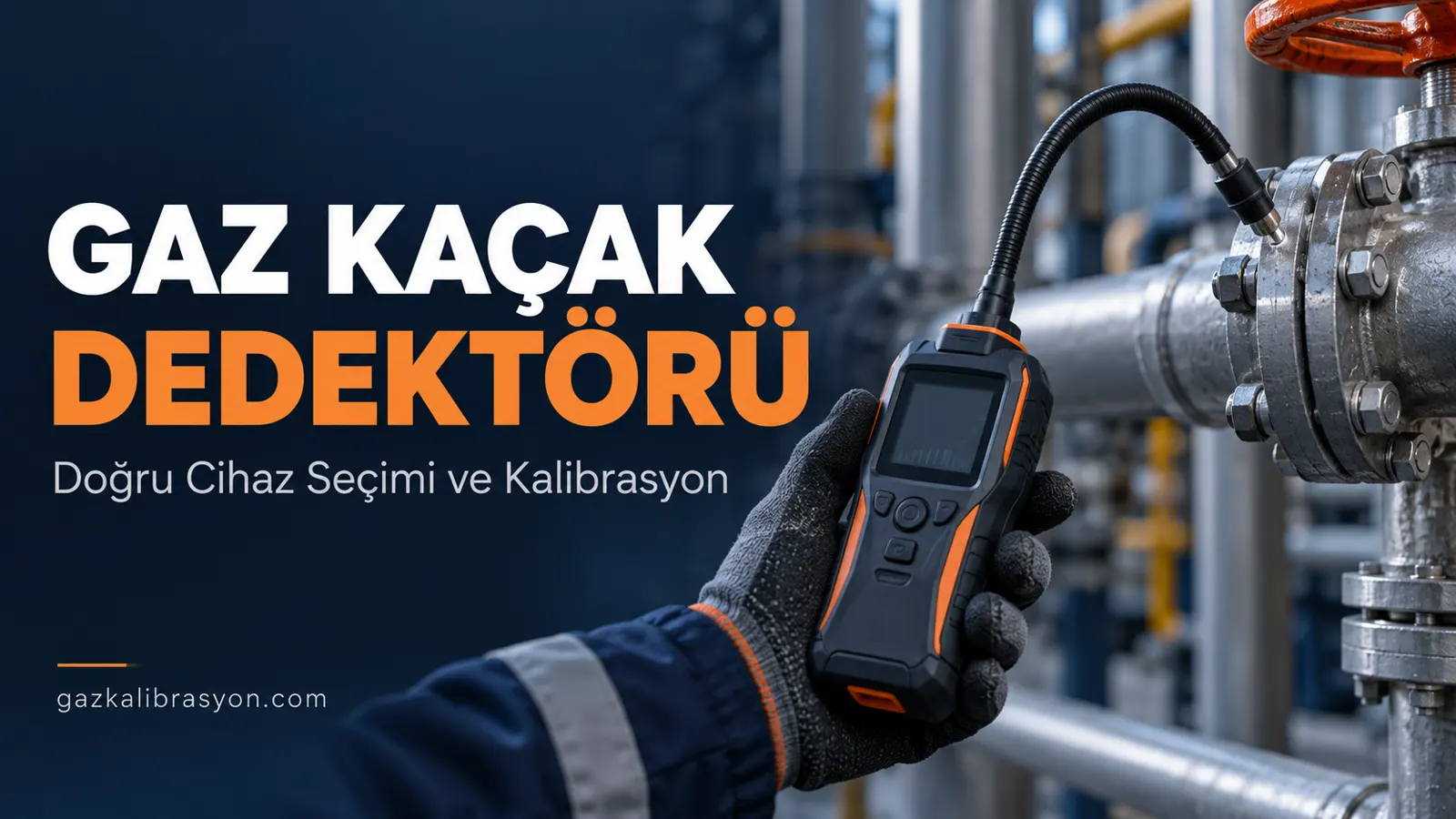
Gas Leak Detector Guide: Choosing the Right Device and Understanding Calibration
Learn how to choose a gas leak detector for your application and understand the importance of gas compatibility, functional testing and calibration.
· 5 dk
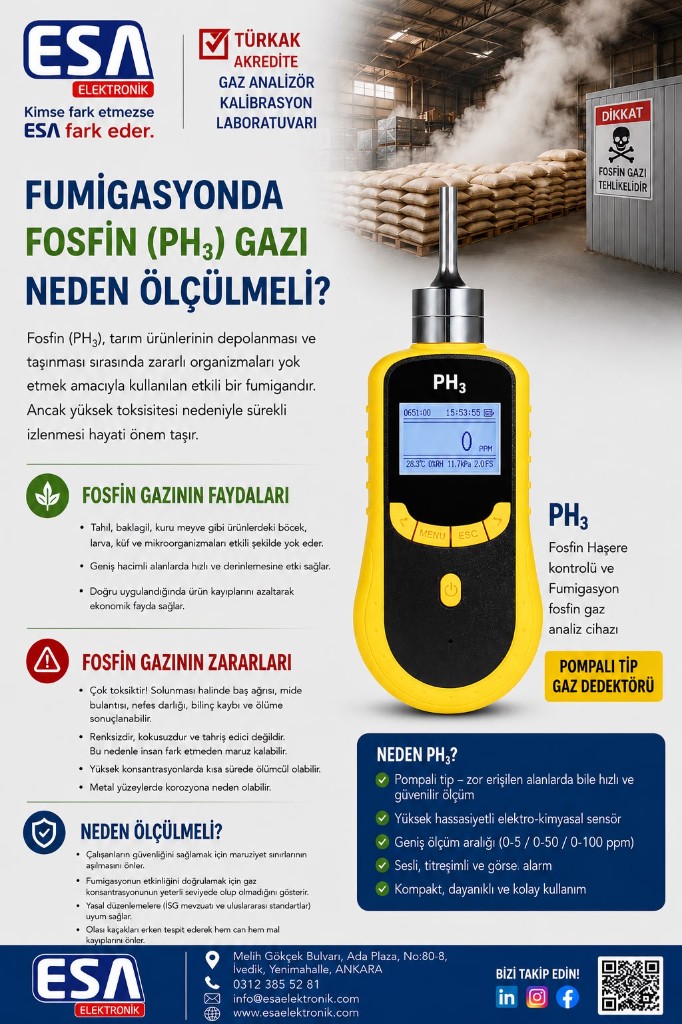
Why measure phosphine (PH₃) during fumigation?
Phosphine is effective in grain fumigation but highly toxic. Pump PH₃ detectors and calibration.
· 8 dk
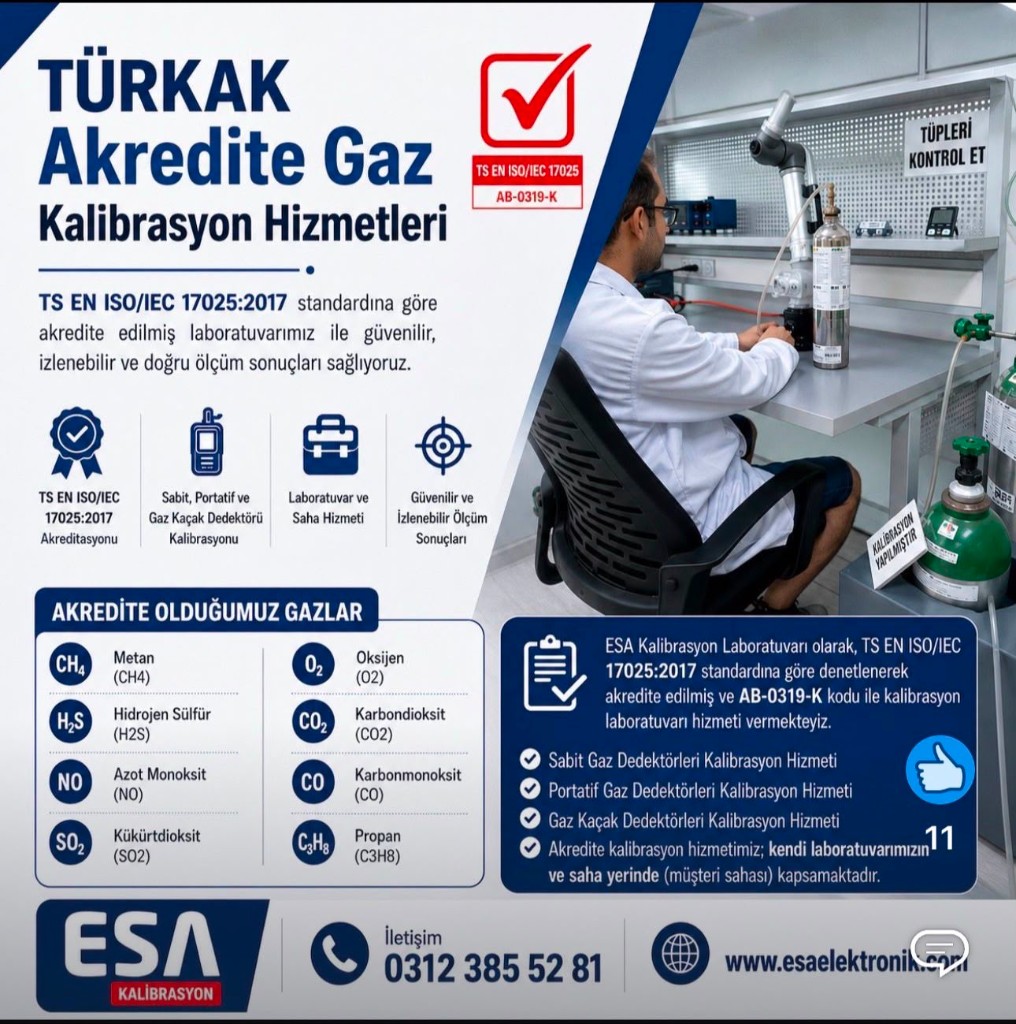
TURKAK accredited gas calibration services
Under AB-0319-K: methane, H₂S, O₂, CO, CO₂, SO₂, NO and propane — lab and field.
· 8 dk