
Ammonia (NH₃) gas-detection solutions
Early ammonia warning in cold stores, fertiliser and process plants — detector placement and calibration.
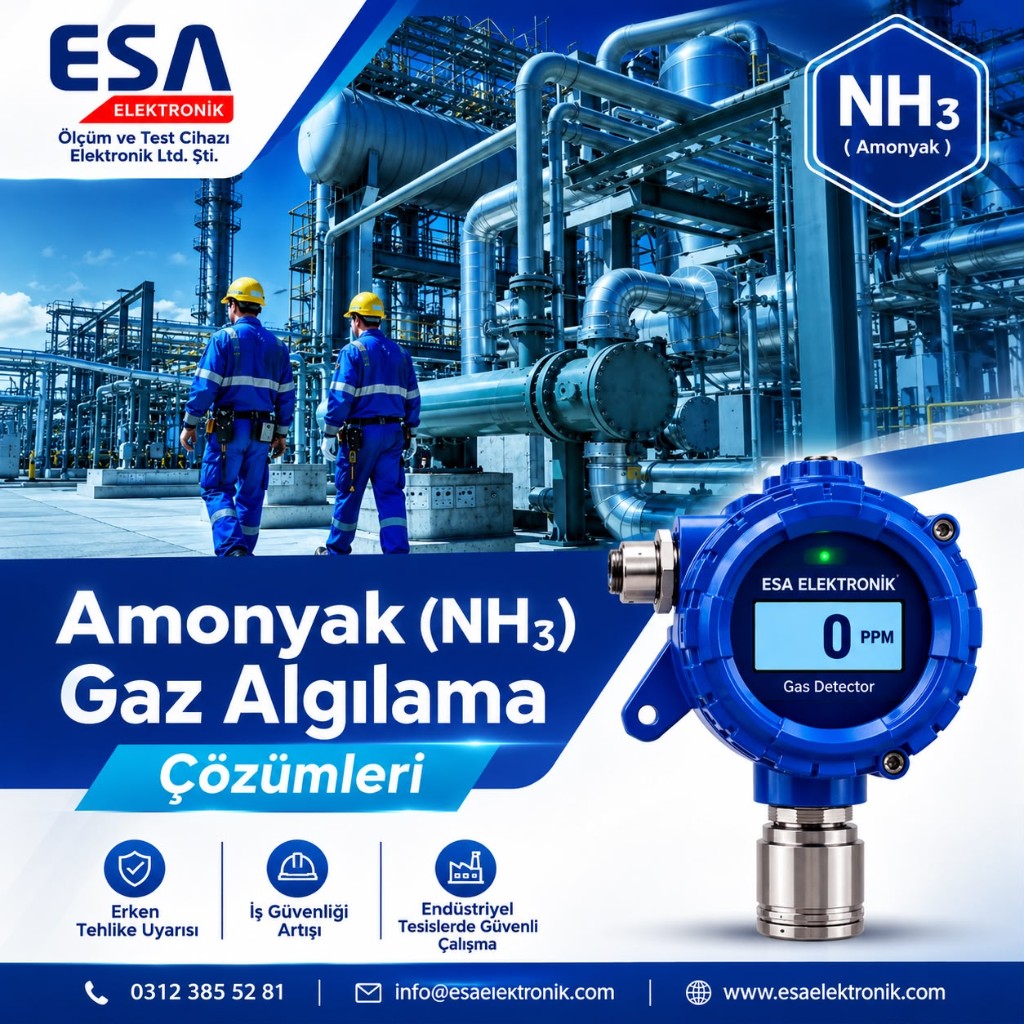
Ammonia (NH₃) is a common refrigerant and process gas in cold stores, fertiliser and chemical plants. The sharp smell is an early clue, but high concentrations still injure airways, can form a flammable mix and create an environmental release. A fixed NH₃ detector catches a leak at ppm level and drives alarm and ventilation.
Why monitor it
- Early warning — act while the leak is small.
- Occupational safety — plant rooms, evaporators and filling bays.
- Safe industrial operation and environmental rules.
Placement and calibration
Ammonia is lighter than air; head height and ceiling runs depend on the room. Electrochemical or semiconductor cells work in the ppm range; Ex rating follows the site zone. Cell life and cross-gases (some cleaning vapours) make periodic calibration mandatory.
ESA sells, commissions and calibrates fixed and portable NH₃ detectors from the Ankara laboratory and field team, with TURKAK-traceable certificates. Quote with model, range (ppm) and number of points.
Request a calibration quote · TURKAK gas calibration · 0312 385 52 81 · 0533 659 91 60
Customer reviews
Share your experience
No published reviews yet. Be the first to write one.
More articles
Keep reading
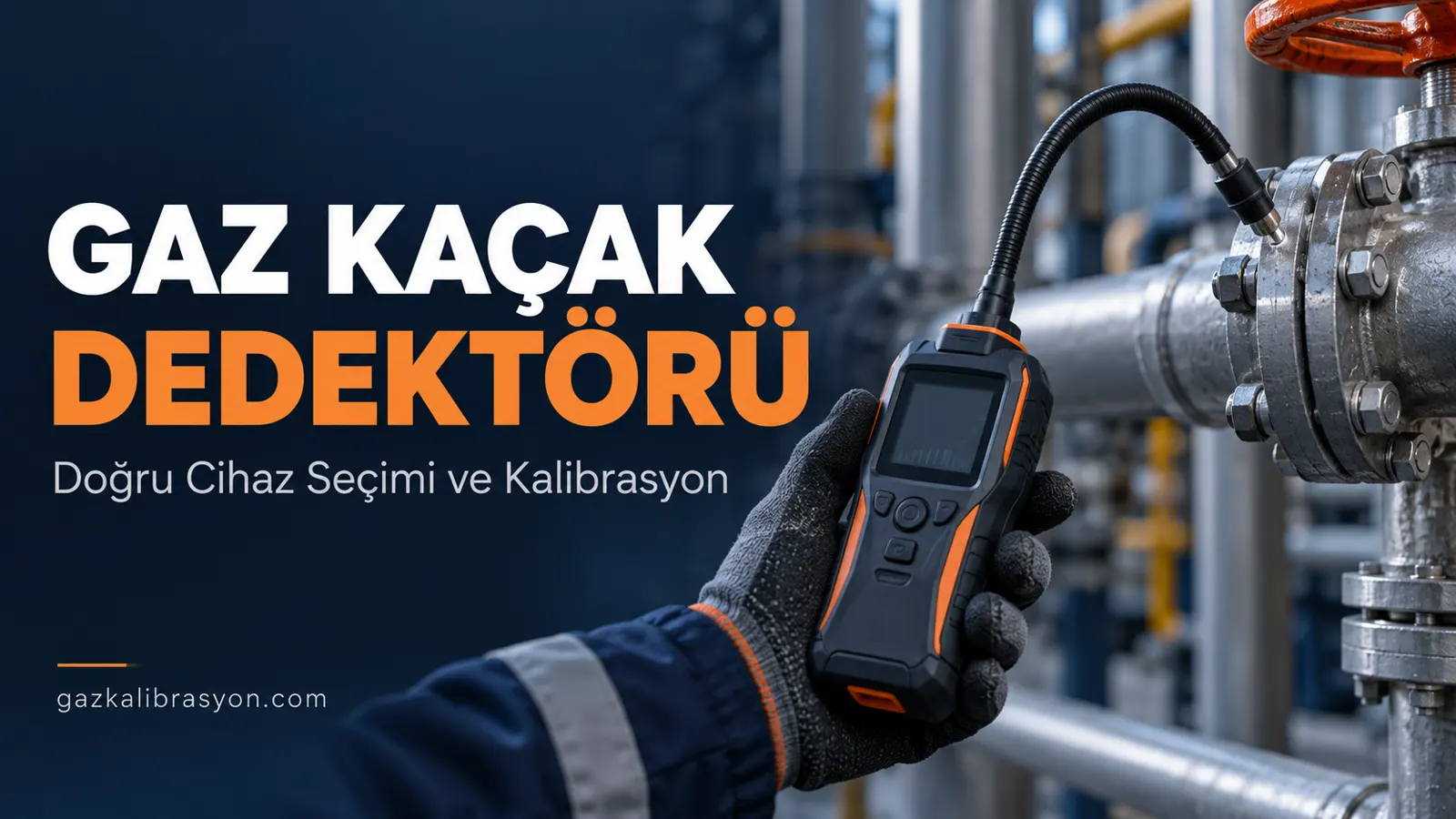
Gas Leak Detector Guide: Choosing the Right Device and Understanding Calibration
Learn how to choose a gas leak detector for your application and understand the importance of gas compatibility, functional testing and calibration.
· 5 dk
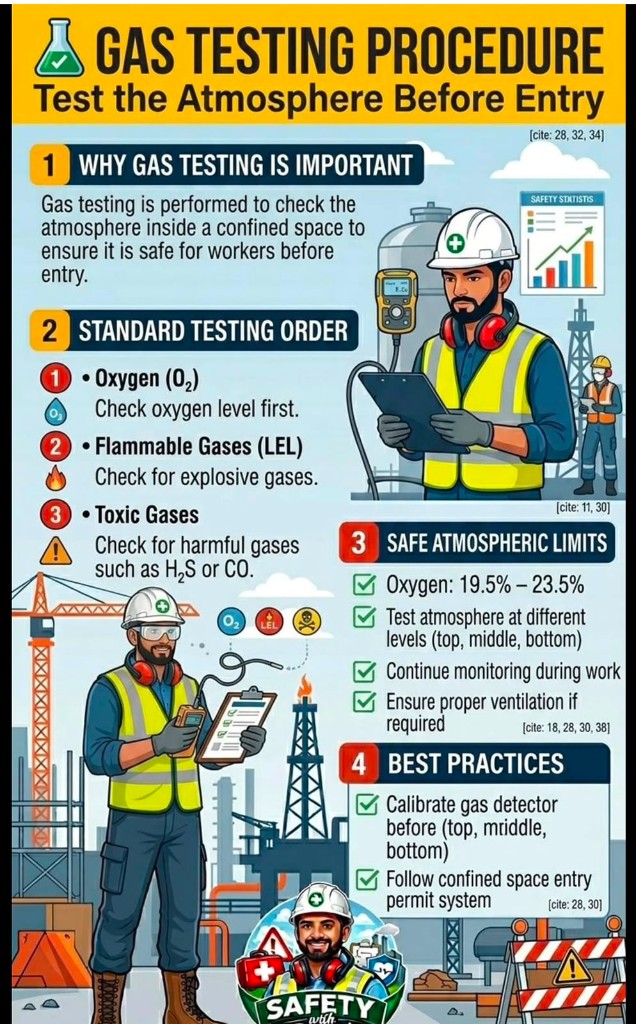
Gas testing before confined-space entry
Before entry, test oxygen, LEL then toxics. A calibrated gas detector is part of confined-space safety.
· 9 dk
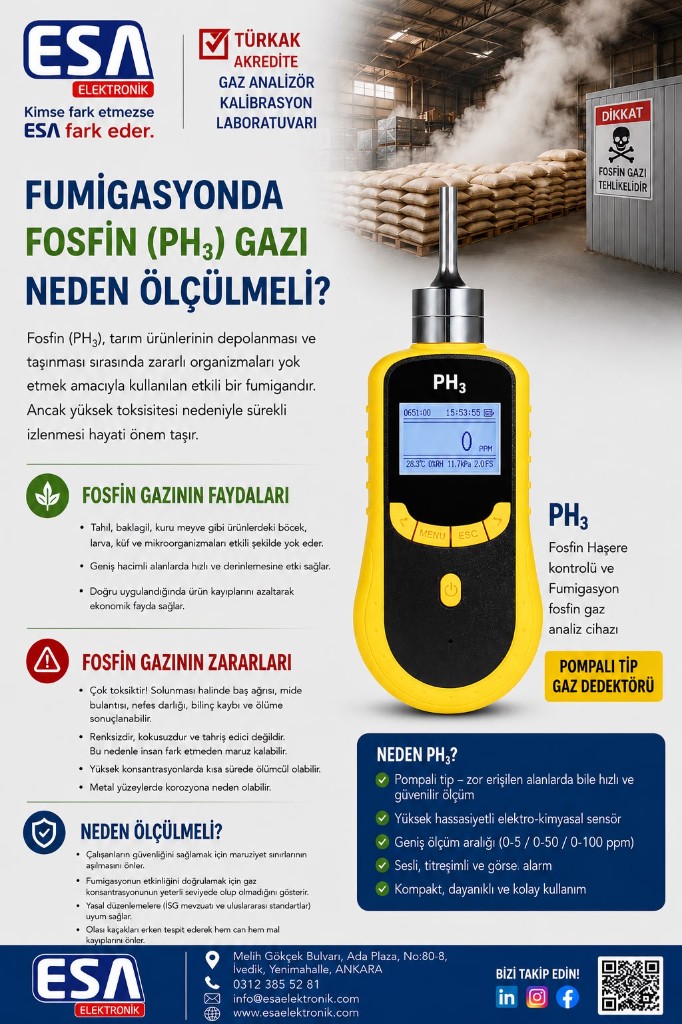
Why measure phosphine (PH₃) during fumigation?
Phosphine is effective in grain fumigation but highly toxic. Pump PH₃ detectors and calibration.
· 8 dk