
Wastewater gas detector: H₂S, CH₄ and O₂
Wastewater plants monitor H₂S, methane and oxygen together. Fixed GDSFX-type detectors and calibration.
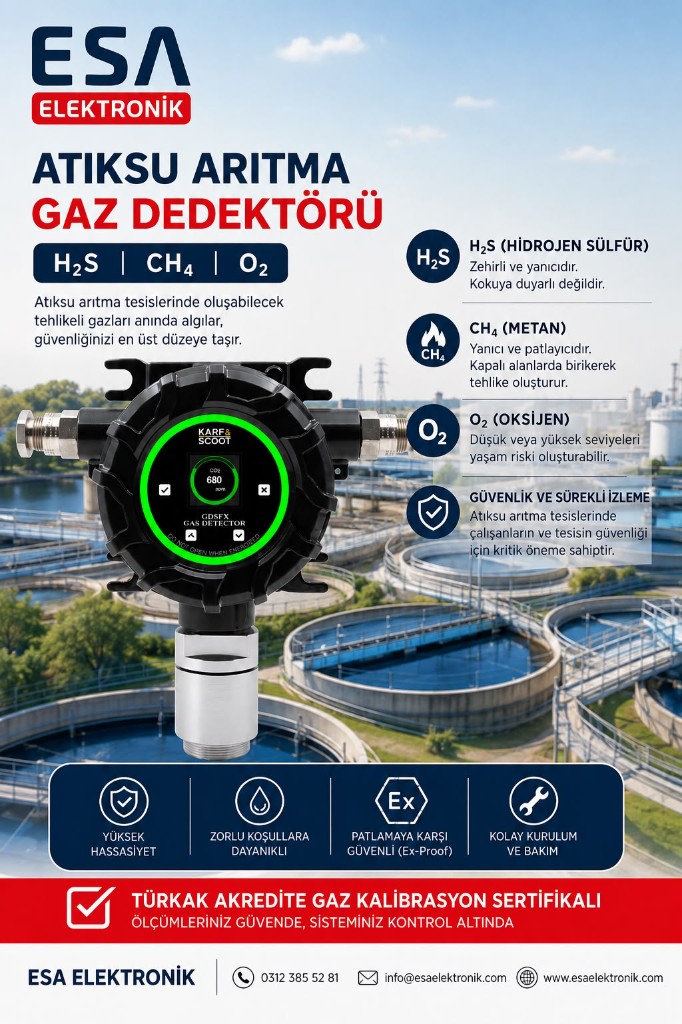
In wastewater plants, sludge, screens and covered channels produce hydrogen sulphide (H₂S), methane (CH₄) and oxygen (O₂) hazards at the same time. H₂S is toxic and flammable; smell fatigue comes quickly. Methane accumulates and explodes. Low oxygen is an asphyxiation risk. A fixed detector watches all three continuously.
Why these three gases
- H₂S — decay gas; toxic at low ppm, flammable at high levels.
- CH₄ — main biogas component; explosive near LEL.
- O₂ — sets both combustion and breathable air; a drop is life-critical.
Fixed detector choice
Expect humidity, H₂S corrosion and Ex atmosphere. A Karf & Scoot GDSFX-type head is an example of a multi-gas industrial solution. Place heads at screens, sludge silos, covered channels and control-room doors. An Ex-proof body, service access and a TURKAK accredited calibration certificate matter for permits.
ESA sells instruments and calibrates the cells in the laboratory or on site. Quote with model, gas mix (H₂S / CH₄ / O₂) and quantity.
Request a calibration quote · TURKAK gas calibration · 0312 385 52 81 · 0533 659 91 60
Customer reviews
Share your experience
No published reviews yet. Be the first to write one.
More articles
Keep reading

Gas Leak Detector Guide: Choosing the Right Device and Understanding Calibration
Learn how to choose a gas leak detector for your application and understand the importance of gas compatibility, functional testing and calibration.
· 5 dk
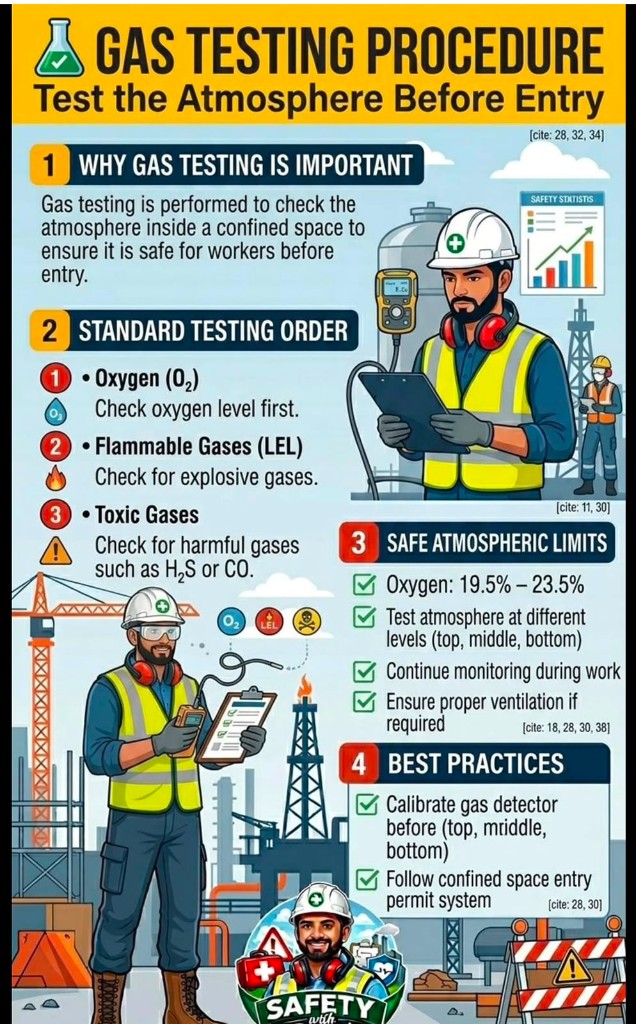
Gas testing before confined-space entry
Before entry, test oxygen, LEL then toxics. A calibrated gas detector is part of confined-space safety.
· 9 dk
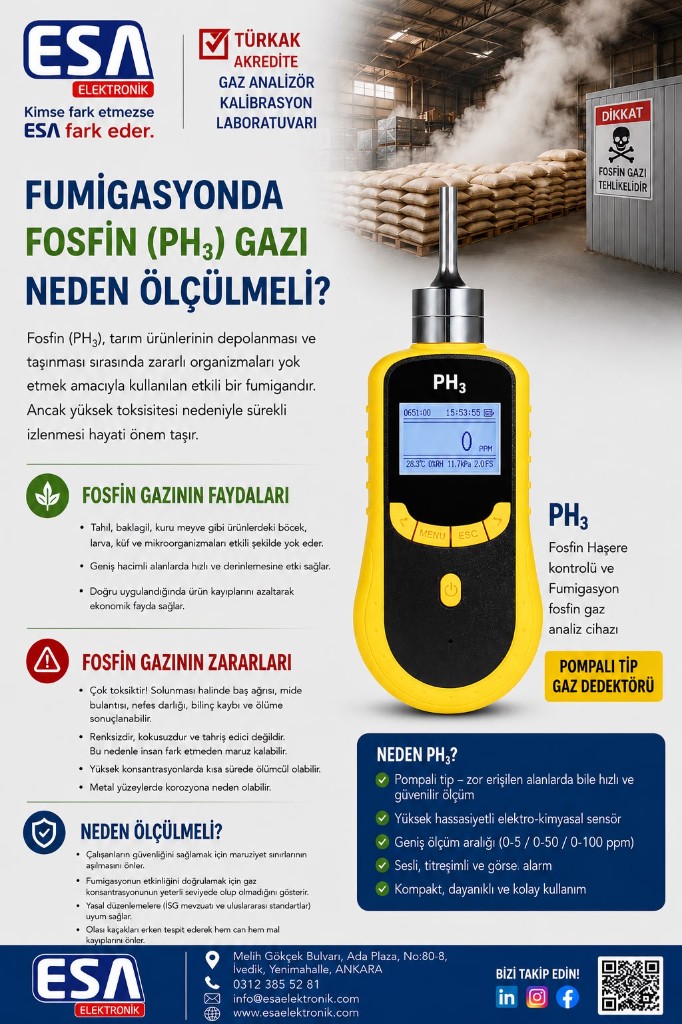
Why measure phosphine (PH₃) during fumigation?
Phosphine is effective in grain fumigation but highly toxic. Pump PH₃ detectors and calibration.
· 8 dk