
What are LEL and UEL? Understand the explosion range
Lower and upper explosive limits define the flammable range. Methane example and a gas table.
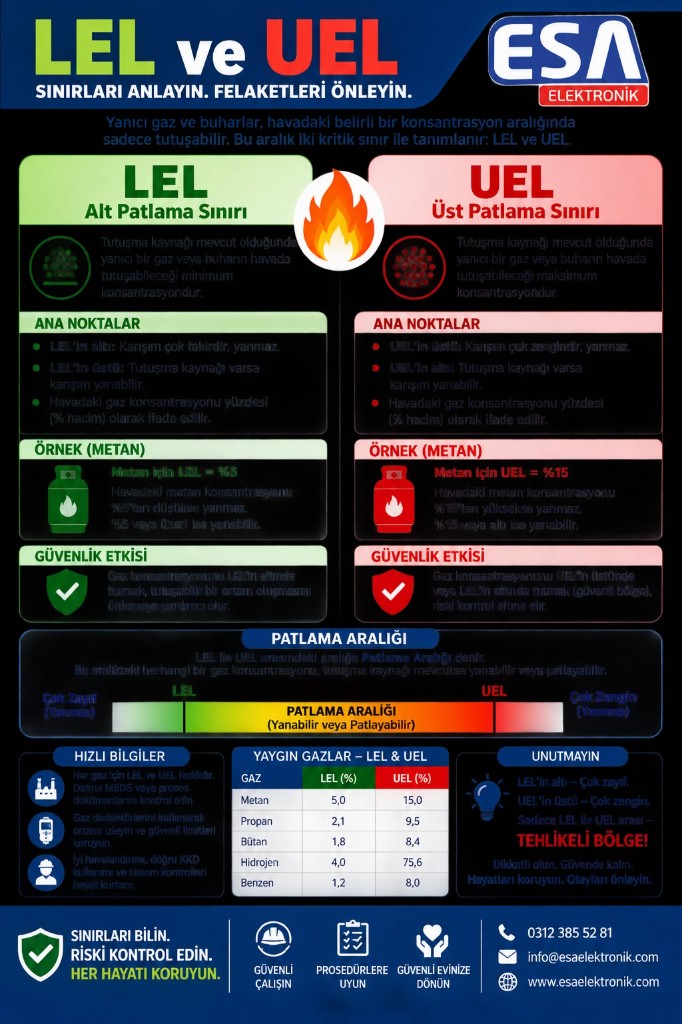
Flammable gases and vapours ignite in air only inside a concentration window. The lower edge is LEL (lower explosive limit), the upper edge UEL (upper explosive limit). Between them is the explosive (flammable) range. Field detectors usually display %LEL; calibration documents that scale.
LEL — lower explosive limit
- Below LEL the mix is too lean to burn.
- Above LEL (inside the range) a mix can burn if an ignition source exists.
- Concentration is expressed as % by volume in air.
Methane example: LEL ≈ 5% vol. Below 5% it will not burn; from 5% up to UEL it can.
UEL — upper explosive limit
- Above UEL the mix is too rich to burn (not enough oxygen).
- Below UEL (inside the range) it can burn with an ignition source.
Methane example: UEL ≈ 15% vol. Above 15% it will not burn; down to LEL it can.
Safety effect
Below LEL a flammable atmosphere is not expected — that is not a licence to skip ventilation, hot-work controls or monitoring. Between LEL and UEL any gas-air mix can explode if ignited. Above UEL the cloud is “too rich”, but dilution can bring it back through the range; do not treat UEL-plus as safe.
Common gases (% vol)
| Gas | LEL (%) | UEL (%) |
|---|---|---|
| Methane | 5.0 | 15.0 |
| Propane | 2.1 | 9.5 |
| Butane | 1.8 | 8.4 |
| Hydrogen | 4.0 | 75.6 |
| Benzene | 1.2 | 8.0 |
Figures are literature summaries; site procedures and SDS prevail. Detector calibration keeps displayed %LEL close to the real gas. ESA calibrates flammable-gas cells under TURKAK AB-0319-K.
Request a calibration quote · TURKAK gas calibration · 0312 385 52 81 · 0533 659 91 60
Customer reviews
Share your experience
No published reviews yet. Be the first to write one.
More articles
Keep reading
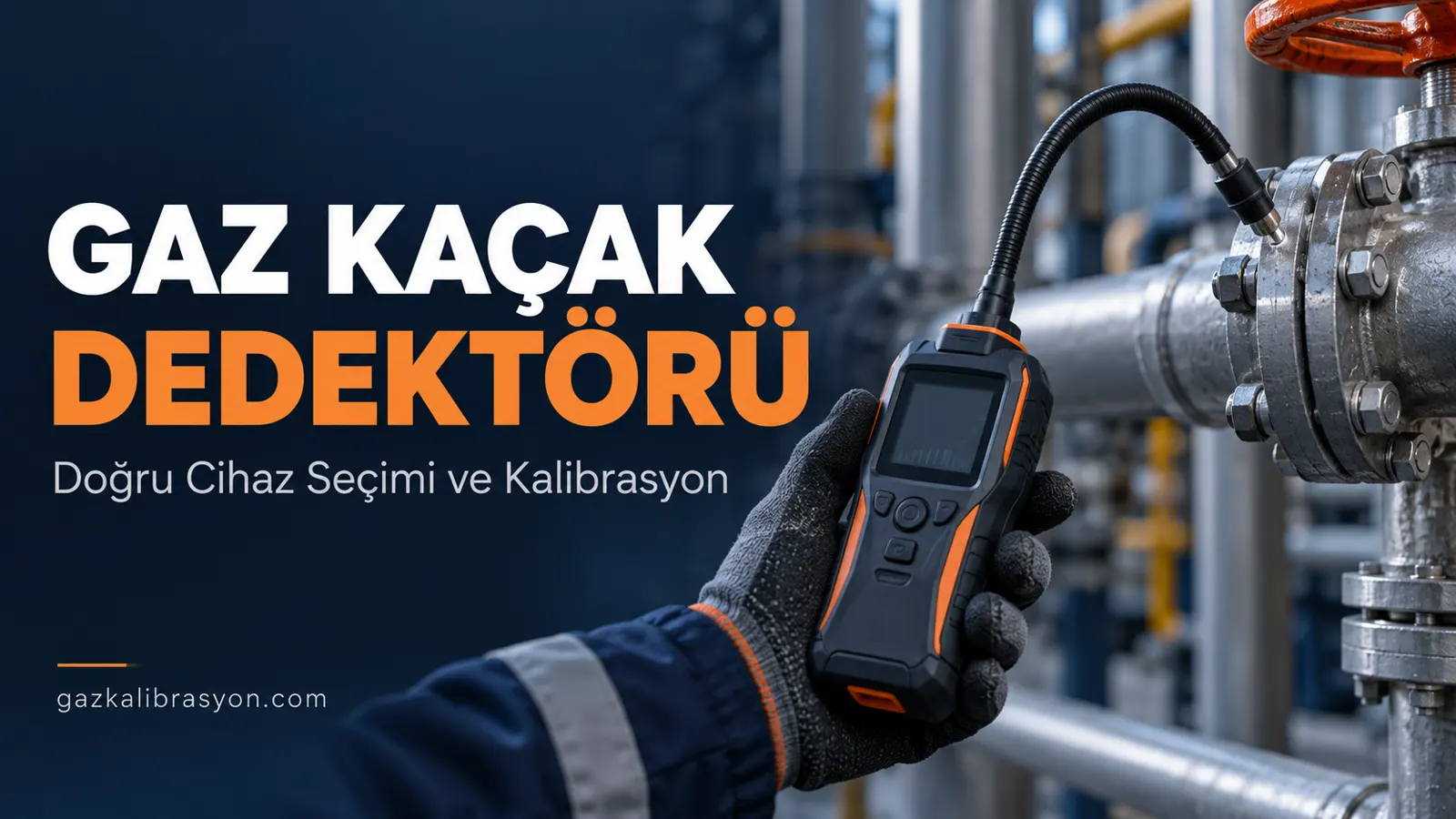
Gas Leak Detector Guide: Choosing the Right Device and Understanding Calibration
Learn how to choose a gas leak detector for your application and understand the importance of gas compatibility, functional testing and calibration.
· 5 dk
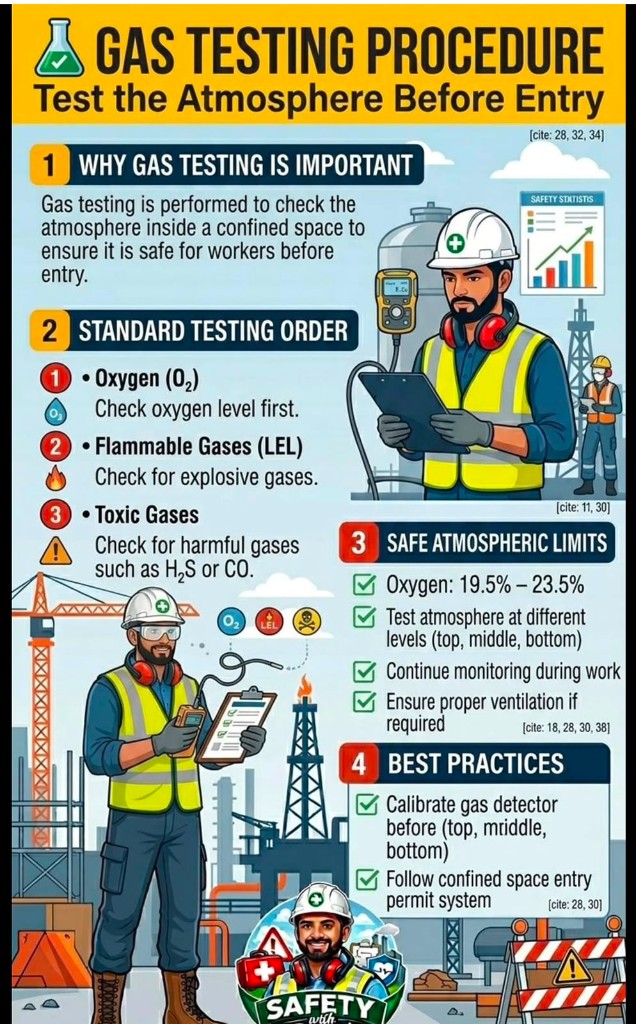
Gas testing before confined-space entry
Before entry, test oxygen, LEL then toxics. A calibrated gas detector is part of confined-space safety.
· 9 dk
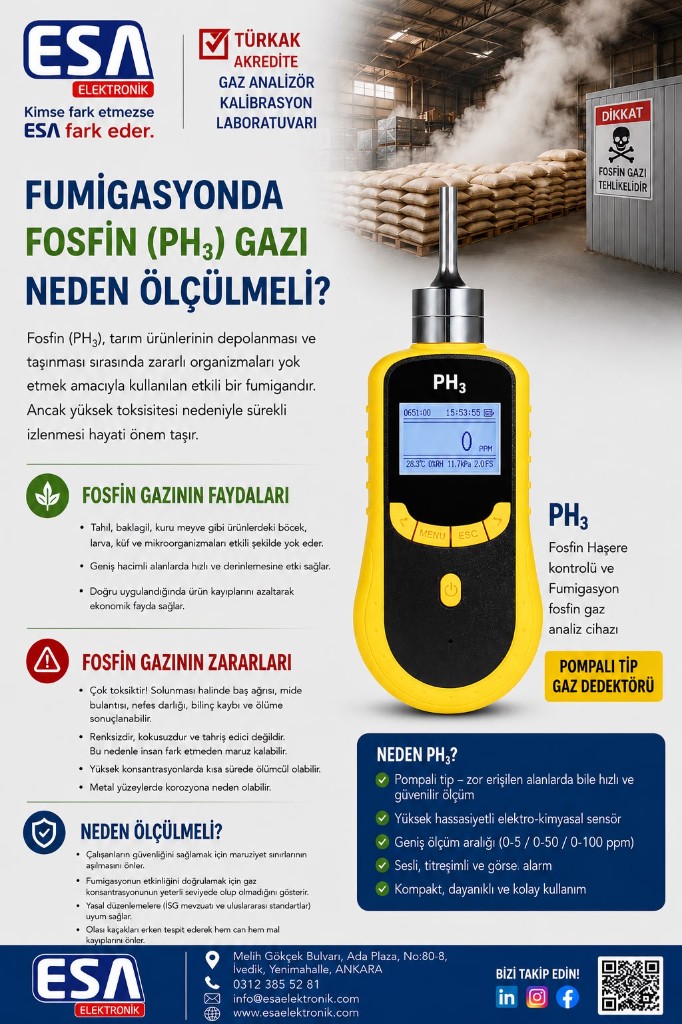
Why measure phosphine (PH₃) during fumigation?
Phosphine is effective in grain fumigation but highly toxic. Pump PH₃ detectors and calibration.
· 8 dk